
This guide is designed to help students and families make informed decisions when considering private or alternative education loans. It provides practical guidance for comparing loan options, borrowing responsibly, and strengthening creditworthiness to help secure more favorable loan terms.
Smart Borrowing Tips
Complete the FAFSA first!
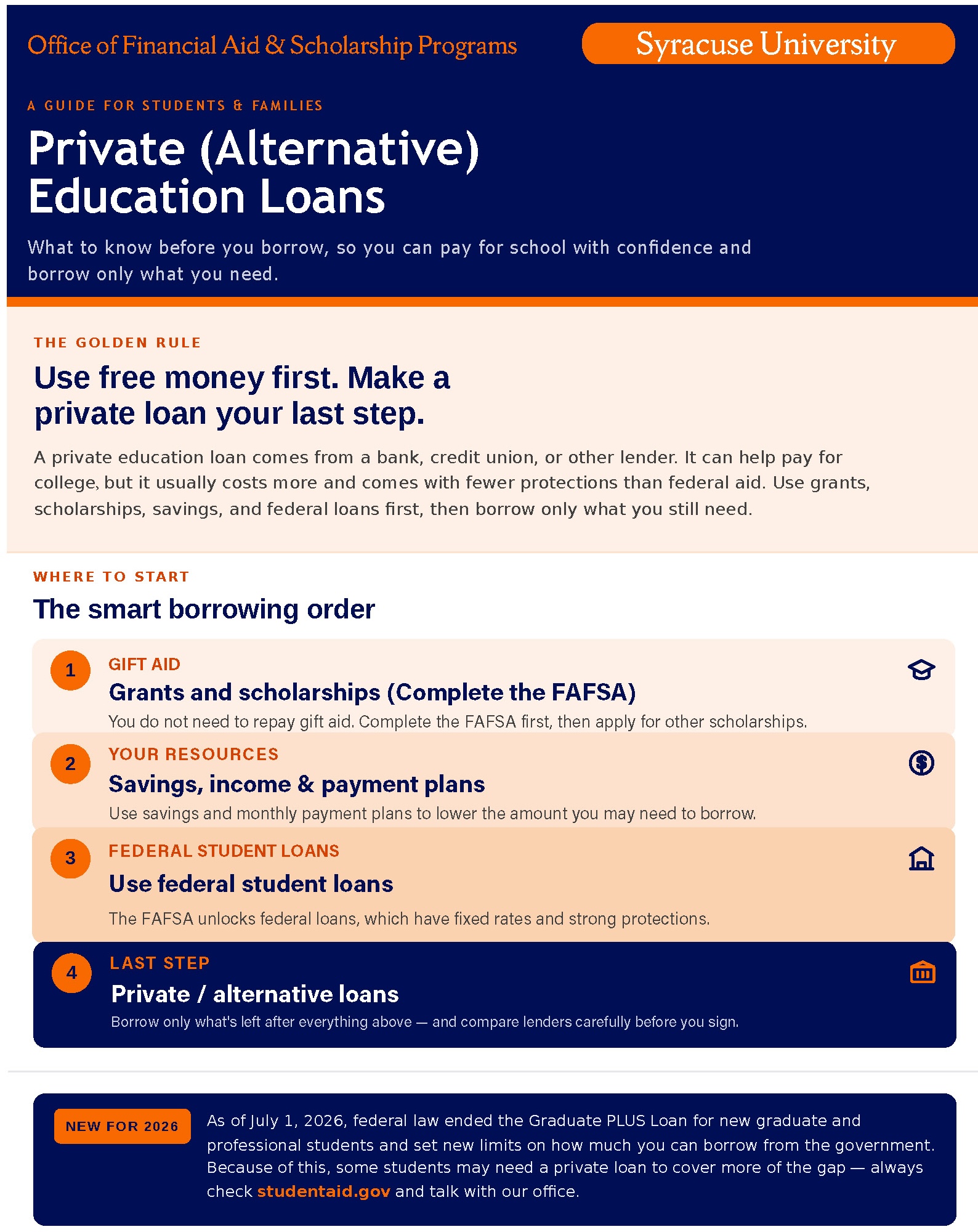
- Complete the FAFSA first. Use your grants, scholarships, work-study earnings, and federal loans before a private loan.
Borrow only what you need
- Borrow only what you need, not the full amount you are approved for. Skipping even a small amount today saves you money later.
Check your credit before you shop
- Check your credit before you shop. Get free reports at AnnualCreditReport.com and fix any mistakes.
Use a “soft credit” rate check (prequalification) to compare offers
- Use a “soft credit” rate check (prequalification) to compare offers. A soft check does not hurt your credit score but confirm this with the lender first.
Compare the Annual Percentage Rate (APR), not just the interest rate
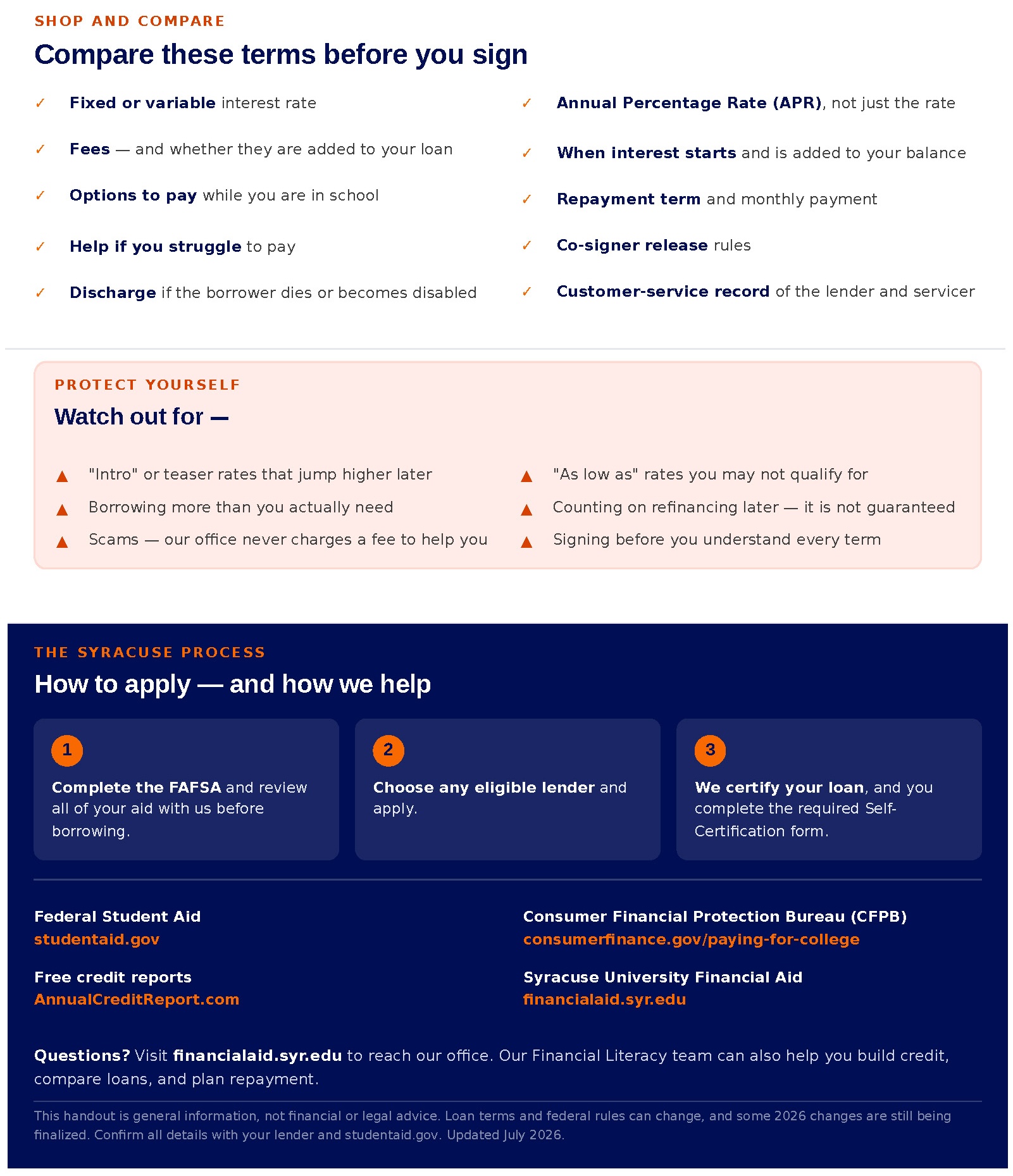
- Compare the Annual Percentage Rate (APR), not just the interest rate. The APR includes fees, so it shows the true cost.
Ask when interest starts and when it is added to your balance
- Ask when interest starts and when it is added to your balance (this is called capitalization). Paying even a little while in school can lower your total cost.
Make sure your co-signer understands they are fully responsible for the loan
- Make sure your co-signer understands they are fully responsible for the loan. Look for a loan that offers co-signer release.
Plan for the worst case you can picture
- Plan for the worst case you can picture, not the lowest advertised payment. Ask what help is available if your income drops.
Frequently Asked Questions
What is a private education loan?
It is a loan from a bank, credit union, or other lender that helps pay for school. Families often use it to cover the gap between the cost of attendance and their other aid.
How is it different from a federal student loan?
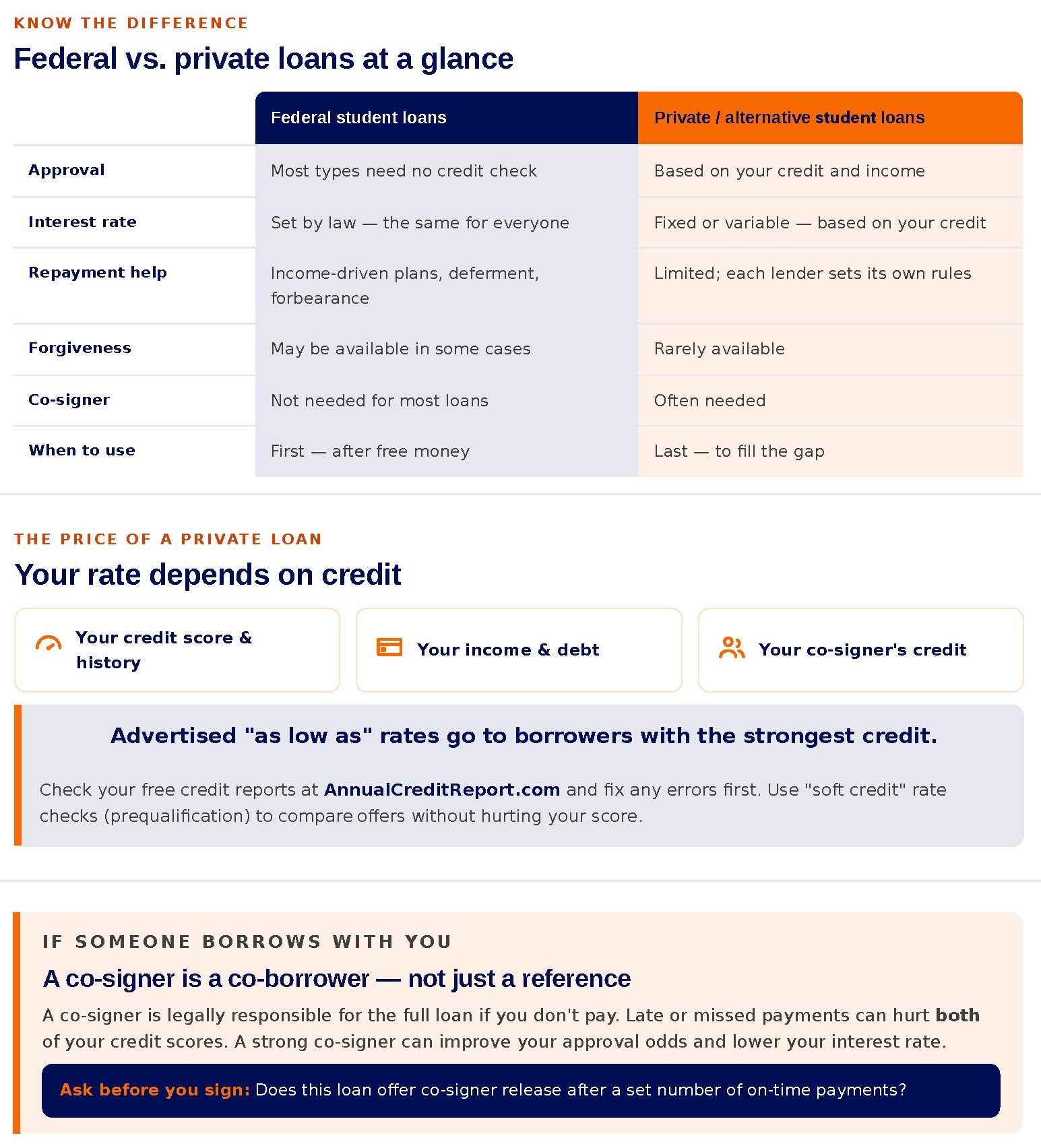
Federal loans have rates set by law and come with protections like income-driven repayment, deferment, and possible forgiveness. Most need no credit check. Private loans are based on your credit; their rates and terms vary, and they usually offer fewer protections.
Do I need a co-signer?
Many students do, especially with little credit history. A co-signer can improve your chances of approval and lower your rate. Remember: a co-signer is legally responsible for the loan if you do not pay.
How much can I borrow?
Private loans are limited to your Cost of Attendance (COA) minus your other aid. The Office of Financial Aid must certify your loan with your lender and ensure your total aid (including any private loan amount) does not exceed the COA.
When does interest start, and can the rate change?
Interest usually starts as soon as the money is disbursed. A fixed rate stays the same for the life of the loan. A variable rate can change over time, which can alter monthly payments.
What if I cannot make my payments?
Contact your lender or servicer right away and ask about deferment, forbearance, or lower payments. Private options are limited, so ask what help is available before you borrow.
Checklist: Before You Sign
Check every box before you accept a private loan.
☐ I completed the FAFSA and used my grants, scholarships, savings, and federal aid first.
☐ I am borrowing only what I need for school costs.
☐ I checked my credit report and fixed any errors.
☐ I compared the APR, fees, and whether the rate is fixed or variable across lenders.
☐ I understand when interest starts and when it is added to my balance.
☐ My co-signer and I both understand they are fully responsible for the loan.
☐ I know my repayment options and what happens if I cannot pay.
Helpful Resources
| Resource | Where to find it |
| Federal Student Aid | studentaid.gov |
| Consumer Financial Protection Bureau (CFPB) | consumerfinance.gov/paying-for-college |
| Free credit reports (all three bureaus) | AnnualCreditReport.com |
| Syracuse University Financial Aid | financialaid.syr.edu |
| College of Law | law.syracuse.edu |
| College of Professional Studies | professionalstudies.syracuse.edu |
We’re Here to Help
Choosing a loan can feel confusing, and you do not have to do it alone. Visit financialaid.syr.edu to reach our office with questions. Our Financial Literacy team can also help you build credit, compare loans, and plan for repayment finlit@syr.edu.
This guide is general information and is not financial or legal advice. Loan terms and federal rules can change, and some 2026 changes are still being finalized. Please confirm all details with your lender and at studentaid.gov before you borrow. Updated July 2026.